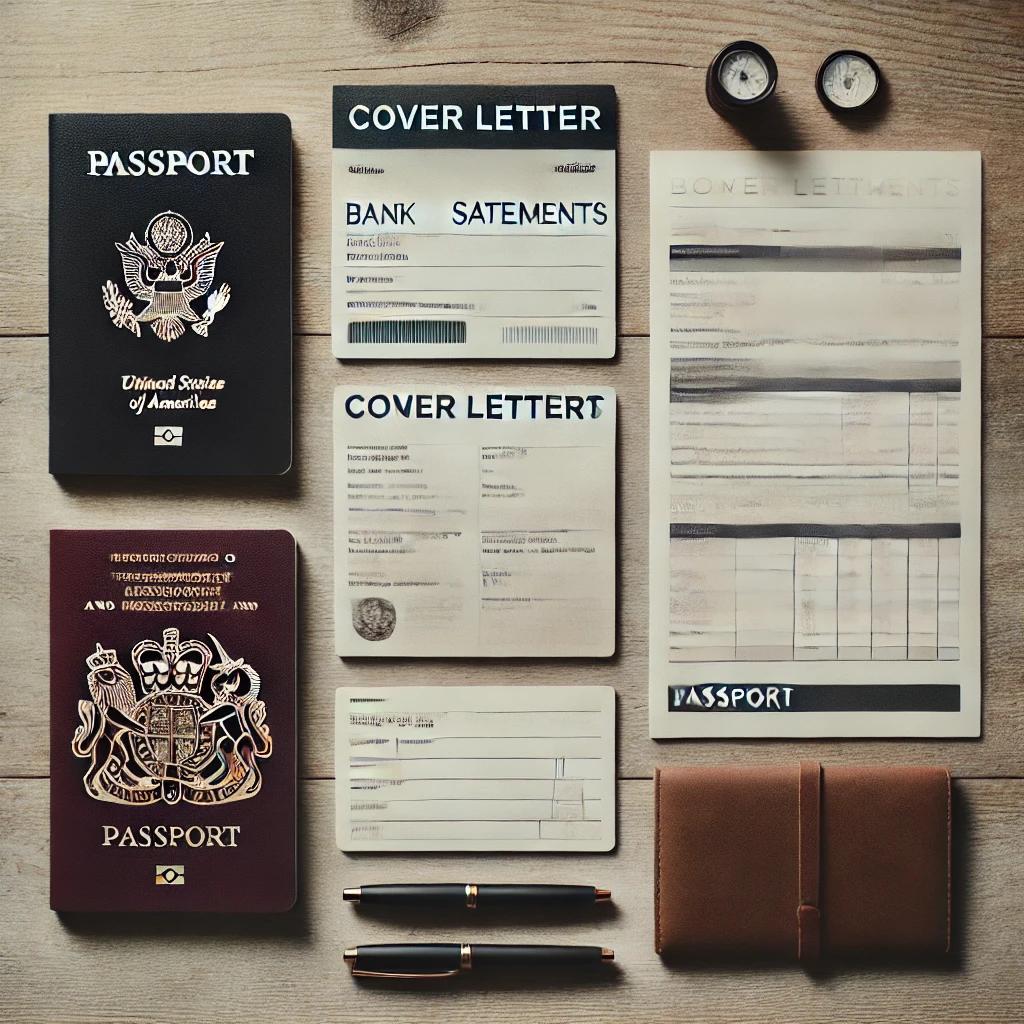
When a family dispute begins, people often focus first on what happened.
That is natural.
But in court, another question quickly becomes just as important:
What can you prove?
A strong family case is not built by collecting as many documents as possible.
It is built by identifying the documents that actually help explain the issue the court is being asked to decide.
A custody case may depend on completely different evidence from a maintenance claim.
A divorce dispute may turn on communications between the spouses.
A financial claim may depend on bank records, property information or income evidence.
So there is no single document list that applies to every family case.
But there are certain types of documents that appear again and again in practice.
Here are 12 categories worth thinking about.
1. Marriage Certificate
The marriage certificate is often one of the first documents required in a family case.
It establishes the legal relationship between the spouses and may be necessary before the court can deal with claims arising from the marriage.
Where the marriage took place outside the UAE, additional formalities may be required before the document can be relied upon locally.
That may include attestation and legal translation, depending on where the marriage certificate was issued and the purpose for which it is being used.
So do not wait until the case has already started to check whether your marriage certificate is ready for use.
A document may exist.
That does not always mean it is ready to be filed.
2. Children’s Birth Certificates and Identity Documents
Where children are involved, their documents can become central very quickly.
Birth certificates may help establish parentage and the legal relationship between the parties and the children.
Passports, Emirates IDs and other identity documents may also become relevant, particularly in disputes involving custody, travel, residence or the retention of a child’s documents.
The importance of these records is not limited to proving identity.
Sometimes they help answer practical questions about the child’s legal status, residence and family arrangements.
3. Identity Documents of Both Parties
A copy of the other party’s passport, Emirates ID or other available identity document can save significant time.
Family proceedings often require accurate details for notification, identification and court records.
Something as basic as an incorrect name, passport detail or address can create avoidable procedural difficulty.
This is why simple documents are not always unimportant documents.
Good preparation often begins with getting the basics right.
4. Photographs
A photograph can sometimes explain a situation more clearly than several pages of allegations.
But a photograph matters because of what it proves — not because it looks dramatic.
In a custody dispute, for example, a photograph may become relevant if it genuinely demonstrates a condition affecting the child’s safety, living environment, supervision or welfare.
Context matters.
When was the photograph taken?
Where?
Who is shown?
Is the date known?
Does it prove what the person relying on it says it proves?
A photograph without context can be weak.
A photograph connected to a clear issue in the case can be powerful.
5. Social Media Content
People often treat social media as informal or temporary.
In a legal dispute, it may not be.
Posts, photographs, comments and other publicly shared content may become relevant where they help establish a fact in dispute.
But again, relevance is everything.
A social media post is not important simply because it is embarrassing or unpleasant.
The real question is whether it helps prove something that matters to the case.
6. WhatsApp Messages, Emails and Other Communications
In many modern family disputes, the most useful evidence is already on a phone.
Messages may show what the parties agreed.
What one spouse admitted.
Whether a payment was requested or refused.
How arrangements concerning a child were discussed.
Whether a promise was made.
Or how a dispute developed over time.
Emails and electronic communications can therefore play an important role in family proceedings.
But screenshots should not be treated casually.
Keep the full conversation where possible.
Preserve dates.
Preserve the identity of the sender.
And avoid relying only on isolated lines that lose their meaning when read outside the full exchange.
The strongest message is usually the one whose context can also be explained.
7. Medical Records
Medical evidence can become particularly important where the physical health of a spouse or child is relevant to the dispute.
That may arise in cases involving custody, care requirements, ability to work, medical expenses or allegations about a particular incident.
A medical report can help move an argument away from competing personal accounts and toward objective evidence.
But not every medical document proves every point.
The date, diagnosis, observations and connection between the report and the issue before the court all matter.
8. Psychological, Social and Welfare Reports
Family disputes are not always about events that can be measured through invoices or photographs.
Sometimes the important question is how a situation is affecting a child or another family member.
Reports issued by psychologists, counsellors, social workers or other relevant professionals may therefore become important in appropriate cases.
The court may also consider reports prepared through its own procedures or experts.
These reports can be particularly valuable because they may provide an independent picture of circumstances that the parties describe very differently.
9. Police Reports and Complaints
Police records can be highly relevant where a family dispute involves allegations of violence, threats, harassment or other reported incidents.
But the existence of a complaint and the final outcome of that complaint are not necessarily the same thing.
A police report may establish that an incident was reported.
A prosecution decision or criminal judgment may establish something further.
So these documents should be understood carefully and used for what they actually prove.
Their value depends on the issue before the family court and the stage or outcome of the related proceedings.
10. Previous Court Judgments
A family dispute rarely exists in complete isolation.
There may already be a criminal judgment, a previous family judgment, a property dispute, an enforcement case or another court decision connected to the parties.
Those judgments may become relevant depending on the issue being considered.
A previous decision could help establish an earlier legal obligation, an ownership position, a financial fact or another matter that affects the family case.
Foreign judgments may also be relevant in some disputes, although their legal effect and use in the UAE will depend on the particular circumstances.
The important point is to identify not simply that a judgment exists, but what it actually proves.
11. Bank Statements and Financial Records
A bank statement is rarely just a number showing how much money is in an account.
It may tell a much bigger story.
It may show salary payments.
Regular transfers.
Rental income.
Loan repayments.
School fees.
Household expenditure.
Transfers to another account.
Or patterns of spending that are relevant to a financial issue before the court.
In maintenance and other financial disputes, the real financial picture may be broader than a salary certificate alone.
This is why bank records can be particularly important.
They may help the court understand not only what a person says they earn, but how their finances actually operate.
12. Official Enquiries and Records Obtained Through the Court
Some of the most useful information may not be in either party’s possession when the case begins.
Depending on the dispute and the court’s directions, official information may be sought from relevant authorities.
This could include information connected to property, vehicles, financial interests or other registered assets.
Such records can make a significant difference where a party’s financial position, ownership or resources are disputed.
And this is exactly why a case should not always be assessed only by looking at the documents a client already has on day one.
Sometimes the important evidence is the evidence that still needs to be obtained.
More Documents Do Not Automatically Mean a Stronger Case
This is one of the most important points.
A file containing hundreds of screenshots, photographs and statements is not automatically stronger than a file containing ten carefully selected documents.
The question is not:
How much evidence do you have?
It is:
What does each piece of evidence prove?
The best evidence is usually evidence that connects directly to a disputed fact, is clear in its source and context, and helps the court understand the issue without unnecessary distraction.
Start With the Issue — Then Find the Evidence
Before collecting documents, identify the real questions in your case.
Are you trying to prove income?
A child’s living arrangements?
A payment?
An agreement?
A medical issue?
A pattern of behaviour?
An ownership interest?
Once the issue is clear, the evidence becomes easier to organise.
At My Family Lawyer, we do not approach evidence as a pile of documents to be attached to a court file.
We ask what each document does.
What fact does it establish?
What argument does it support?
Does it need context?
Is there stronger evidence available?
And is there something important missing?
Because in a family dispute, the document that changes the case is not always the biggest one.
Sometimes it is the one detail that answers the court’s real question.